Vacuum Cleaner Specs Explained
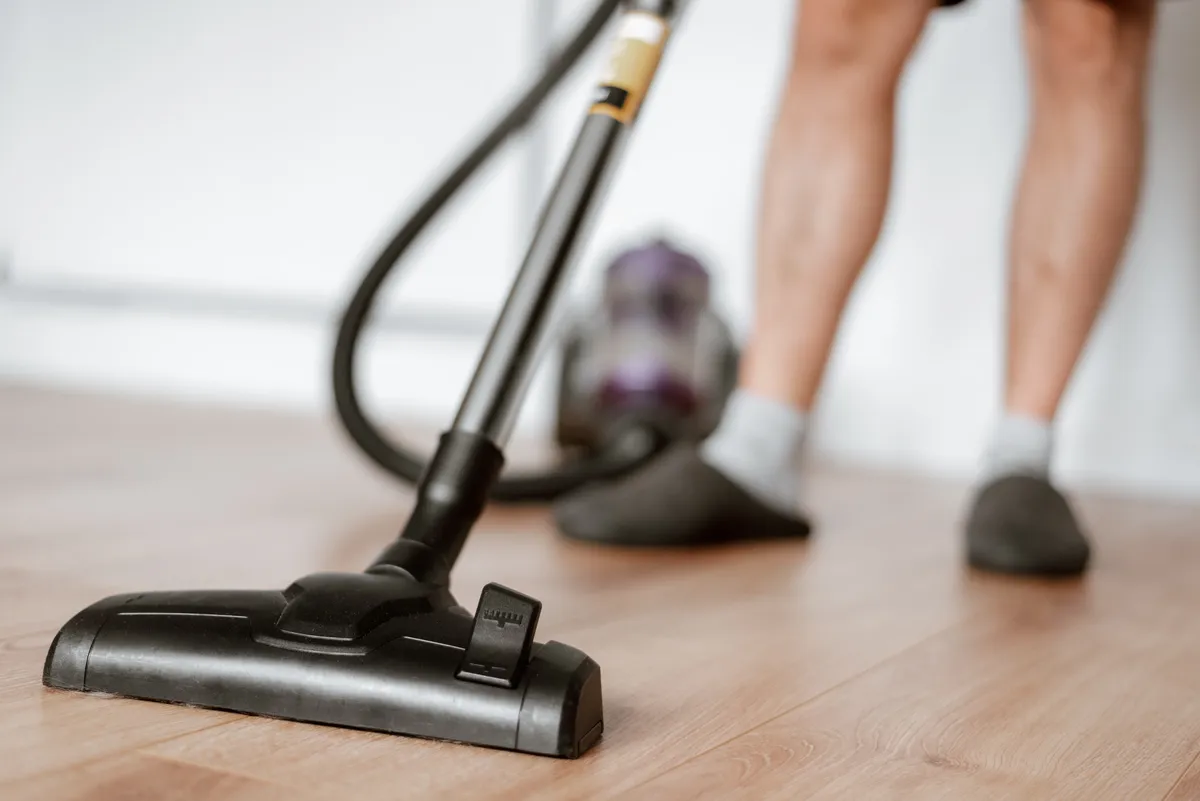
A plain-language glossary of the numbers on a vacuum spec sheet: suction units, noise in decibels, HEPA and sealed filtration, battery runtime and watt-hours, dust capacity, weight, cord length and brush rolls, with a caution for each and links to the full guides.
Data last updated:
The sections below explain the terms on a spec sheet. This page keeps vacuum cleaner specs explained in one quick reference for the terms you will meet on a model page, with a short definition and one caution for each. Where a topic needs more room, the entry points to a full guide in our vacuum cleaner guides.
Suction ratings: air watts, pascals, water lift and peak HP
Air watts (AW) are calculated by multiplying the airflow by the suction pressure. Water lift is always given at its maximum: a 0-inch opening. The full breakdown sits in our deeper look at how suction is rated.
Peak horsepower is, in Shop-Vac's words, a term used in the wet-dry vacuum industry for consumer comparison purposes, and it does not denote the operational horsepower of a wet-dry vacuum. Sizing and the peak HP label are covered in shop vac size and peak HP.
Noise: what a decibel figure tells you
Decibels are logarithmic, so a sound that is 10 dB louder than another is ten times more intense. Consumer Reports describes its method as measuring sound at ear level with the vacuum set to deep-clean at its maximum power setting, which is worth remembering when a listing does not say how its figure was taken. See our guide to how loud a vacuum cleaner is.
Filtration: HEPA, HEPA-type and sealed systems
To qualify as HEPA, a filter must remove at least 99.97% of particles at 0.3 microns in size. Labels such as "HEPA-type" or "HEPA-like" are unregulated and generally indicate the filter did not meet the 99.97% threshold. Look for the percentage and the particle size on the sheet rather than relying on the label alone. A washable filter is one you rinse instead of replace: Shark says filters should air dry completely before refitting, typically for at least 24 hours. Sealed systems and the true HEPA question are explained in our guide to HEPA filtration.
Battery and runtime figures on cordless models
One watt-hour is one volt times one amp-hour, and watt-hours take the voltage into account, which makes them the figure to check when packs differ in voltage. Run times versus battery lifespan are covered in our guide to battery run time and lifespan.
Dust capacity: bins, bags and units
Bagless models replace the bag with a removable container and a reusable filter. Compare capacity in a single unit across models. Whether you want to buy bags or empty a bin is a separate choice, weighed up in our comparison of bags against bins.
Weight, cord length and floor-head types
Weight is worth checking against what the listing includes: Consumer Reports weighs each vacuum with its onboard tools. Cord length is a standard spec item, listed together with hose length where a hose applies.
The brush roll, also called a beater bar, is the rotating brush in the floor head. The brush-roll motor can sometimes be switched off, so hard floors can be cleaned, and Consumer Reports praises a brush on/off switch for protecting the finish on hardwood floors. Definitions of body styles and other shopping vocabulary are collected under vacuum cleaner types and terms.
Vacuum types and power source
Models are sorted into upright, canister, cordless stick, robot, handheld and wet & dry types. An upright has a cleaning head with a handle and bag attached, while a canister keeps the motor and dust collectors in a separate unit, usually mounted on wheels. Robots move autonomously while collecting surface dust and debris into a dustbin, and wet & dry models can be used to clean up wet or liquid spills. The upright and canister styles are weighed against each other in our upright and canister comparison, and robots against regular vacuums has its own guide.
Corded and cordless
The Power source row tells you whether a model runs from the mains or from a battery. Lightweight handheld vacuum cleaners come either powered from rechargeable batteries or mains power. Battery models list runtime, battery capacity and battery voltage in the table, which is why those rows are explained above. Our page on corded versus cordless vacuums walks through the trade-off.
Features you will see on a spec sheet
The table can also list a washable filter, app control, a self-emptying dock, a 2-in-1 mop and vacuum, and wet and dry capability.
Self-emptying dock
For iRobot's AutoEmpty dock, the maker's instruction is to drop the used bag into the trash and put a new one in the base. That is one maker's description, so read the listing for how a given model handles it. More detail is in our guide to self-emptying robot vacuums.
App control
An app-controlled model pairs with a phone app. On iRobot's page, the app lets you tap to set a custom clean, get time estimates and check on the filter life. Read the listing to see what the app covers for the model you are looking at.
2-in-1 mop and vacuum
Consumer Reports notes that many new robotic vacuums now have a mop built into them, and that, depending on the manufacturer, they are marketed as 2-in-1, hybrid or combo machines. The label is therefore a marketing term, so check the listing wording for what the mop does.
Wet and dry capable
A wet and dry capable model can be used to clean up wet or liquid spills. Drum sizes and the horsepower label for these machines are covered in our notes on shop vac sizing.
Warranty
The Federal Trade Commission describes a warranty as your promise, as a warrantor, to stand behind your product. The FTC gives the example of a limited warranty that covers only parts and not labor. Read the terms for what is included, and see how long vacuums last for lifespan context.
How our surface and use-case tags work
Surface compatibility
Surface compatibility lists floor or surface types the listing says a model is made for: hard floor, tile, carpet, upholstery or multi-surface. The tags come from manufacturer and retailer listings.
Best for
Best for lists use-case tags attached to a model, such as pet hair, allergies, stairs, small apartments or large homes. Like the surface tags, they come from manufacturer and retailer listings.
Turning a spec sheet into a shortlist
Start from the job, not the number. Decide the floor types, pets, home size and whether a cord bothers you, then use only the specs that bear on those. Match units before you rank anything, treat blank fields as unknown instead of good, and keep a short list of three or four deciding figures. Our walkthrough on choosing the right model turns that into a step-by-step method.
Does a higher wattage mean a stronger vacuum?
Not by itself. The wattage on a label is the electrical power the motor consumes, which includes energy lost due to inefficiencies and unavoidable losses, while air watts measure the air power, and air watts are always smaller than the electrical wattage. When you compare models, look for air watts or for airflow and suction pressure stated together, and treat the electrical wattage as a figure about electricity use rather than about cleaning.
Why check watt-hours instead of just amp-hours?
Watt-hours take the voltage into account. One watt-hour equals one volt times one amp-hour, so the watt-hour figure combines the two numbers on the battery label into one. If a listing gives only amp-hours, look up the voltage as well before you compare packs, and read the runtime figure alongside the capacity.
What should I check before comparing two noise ratings?
Check how each number was taken. Decibels are logarithmic, so a sound that is 10 dB louder than another is ten times more intense, which means small-looking differences matter. Consumer Reports describes measuring sound at ear level with the vacuum set to deep-clean at its maximum power setting. If a listing does not state its method, treat the figure with caution and compare it only with others that do.