Types of Vacuum Cleaners: What Each One Does Best
The main types of vacuum cleaners are upright, canister, stick (often cordless), robot, handheld and wet/dry. Uprights lean toward carpet, canisters toward bare floors and stairs, sticks and robots toward convenience, handhelds toward spot cleaning, and wet/dry vacs toward liquids and workshop debris. Match the type to your floors and space first.
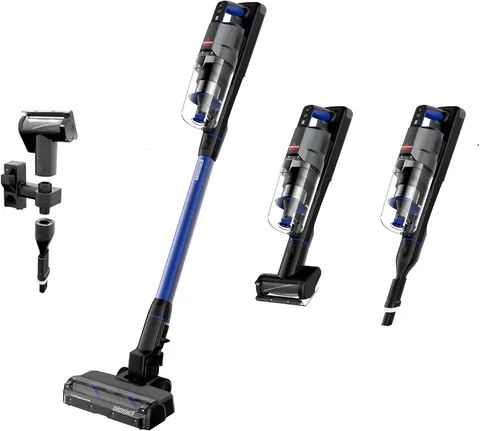
There are six main types of vacuum cleaners sold for US homes: upright, canister, stick (usually cordless), robot, handheld and wet/dry. Each trades power, convenience and storage space differently, so the right type depends mostly on your floors and the size of your home. This page walks through the different types of vacuum cleaners and their uses, then helps you pick one. Our 12-model catalog is compared on published manufacturer and retailer specifications.
What are the main types of vacuum cleaners?
The table summarizes how the vacuum types compare. Weight ranges come from Consumer Reports' vacuum buying guide and cover many models, so individual products can fall outside them.
| Type | Best for | Main drawback | Typical weight |
|---|---|---|---|
| Upright | Carpet and deep cleaning | Harder on stairs; can be noisy | 8 to 21 lb |
| Canister | Hardwood and bare floors, stairs, attachments | Awkward to handle and bulky to store | 9 to 26 lb |
| Stick | Quick cleanups, small spaces | Not ideal as the only vacuum for a large home | 3 to 10 lb |
| Robot | Light, routine upkeep | Cannot replace a full-size vacuum | Varies |
| Handheld | Spot cleaning, cars, upholstery | Limited power and capacity | 1 to 4 lb |
| Wet/dry | Liquid spills, workshop and garage debris | Loud; less suited to everyday floor care | Varies |
If you want to skip straight to ranked picks, our ranked vacuum picks page is the starting point.
Upright vacuums: built for carpet
An upright vacuum cleaner has the motor, dust container and brush head in one body that you push in front of you. Consumer Reports rates the type as best for deep cleaning and carpet, and notes uprights are easy to store. The trade-offs are that they are less handy on stairs and tend to be noisier. If most of your home is carpeted, this is usually where to start. If you also need to treat stains or deep-clean fibers, a separate wet carpet extractor is a different machine from a regular vacuum.
Canister vacuums: bare floors, stairs and attachments
A canister separates the floor head from a wheeled body connected by a hose. Consumer Reports describes canisters as best for hardwood and other bare floors, easier than uprights on stairs and under furniture, and equipped with many attachments. The downsides are that they can be awkward to handle and bulky to store. They suit homes with a lot of hard flooring, stairs or above-floor jobs such as drapes and vents.
Stick and cordless vacuums: quick, light cleaning
A stick vacuum is slim and light, so it is easy to grab for crumbs or a daily pass over the floor. Most are battery powered; a battery powered vacuum cleaner has no cord to manage, but Consumer Reports warns that batteries limit run time and tend to deteriorate over time. Corded sticks avoid that, though the cord can be a tripping hazard. Sticks are generally not a good fit as the only vacuum for a large home. Shoppers who want a specific brand can look at a Dyson stick model and compare run time, bin size and weight on the spec sheet.
Robot, handheld and wet/dry vacuums: specialist roles
Robot vacuums run on a schedule and suit routine upkeep between full cleanings. Consumer Reports notes they cannot replace a full-size vacuum and need floors cleared of obstacles.
Handheld vacuums are small and light for spot cleaning, but lack the power and capacity of full-size models. They are a natural fit for the car, and our auto vacuum cleaners guide covers that use.
Wet/dry vacuums, often called shop vacs, handle both dry and liquid messes, from workshop sawdust to a spilled gallon, according to Consumer Reports' wet/dry buying guide. The same guide says every model it tested was loud, with some reaching 85 decibels, the level at which it recommends ear protection. That guide is now archived and no longer updated, so treat its specifics as dated.
Which type of vacuum do I need?
There is no single best type of vacuum for every home. Work through these questions in order:
- What are your main floors? Mostly carpet points to an upright; mostly hardwood, tile or laminate points to a canister or stick.
- How big is the space, and how much storage do you have? Apartments and small homes often suit a stick or a compact canister. Large homes usually need a full-size vacuum as the main machine.
- Do you want a primary vacuum or a helper? Robots, handhelds and sticks work well as second machines. Many households pair a full-size vacuum with one of them.
- What mess do you deal with most? Pet hair, spilled liquids, car interiors and workshop dust each push toward a different type.
Once you know the type, compare models on the specs that matter for it: weight, bin or bag capacity, cord length or battery run time, and filtration. Then open individual model pages to compare candidates side by side.
Is a bagged or bagless vacuum better?
Neither is better for everyone; it depends on whether you prioritize dust containment or running costs. According to Consumer Reports, bagged uprights and canisters hold more, and swapping a full bag releases less dust and fewer allergens than emptying a bin. Bagless models save the ongoing cost of replacement bags and have a lower environmental impact, since bags are generally not recyclable. If you are sensitive to dust, a bagged model may be more comfortable to empty. If you want to avoid buying bags, choose bagless. Either way, check the filter and bag details on the model page before choosing, as designs and replacement costs vary. The choice applies mainly to uprights and canisters.
Do I need a vacuum with a HEPA filter?
A HEPA filter is worth considering if anyone in your home has allergies or respiratory sensitivity, but it is not required for general cleaning. In Consumer Reports' tests, vacuums with HEPA filters were very effective at reducing particle emissions, which can help people with allergies or respiratory issues. All filters need periodic cleaning or replacement, so check how easy that is and what replacements cost. Filtration is listed on each model's spec sheet, which lets you compare models across the six vacuum types.