How to Choose a Vacuum Cleaner
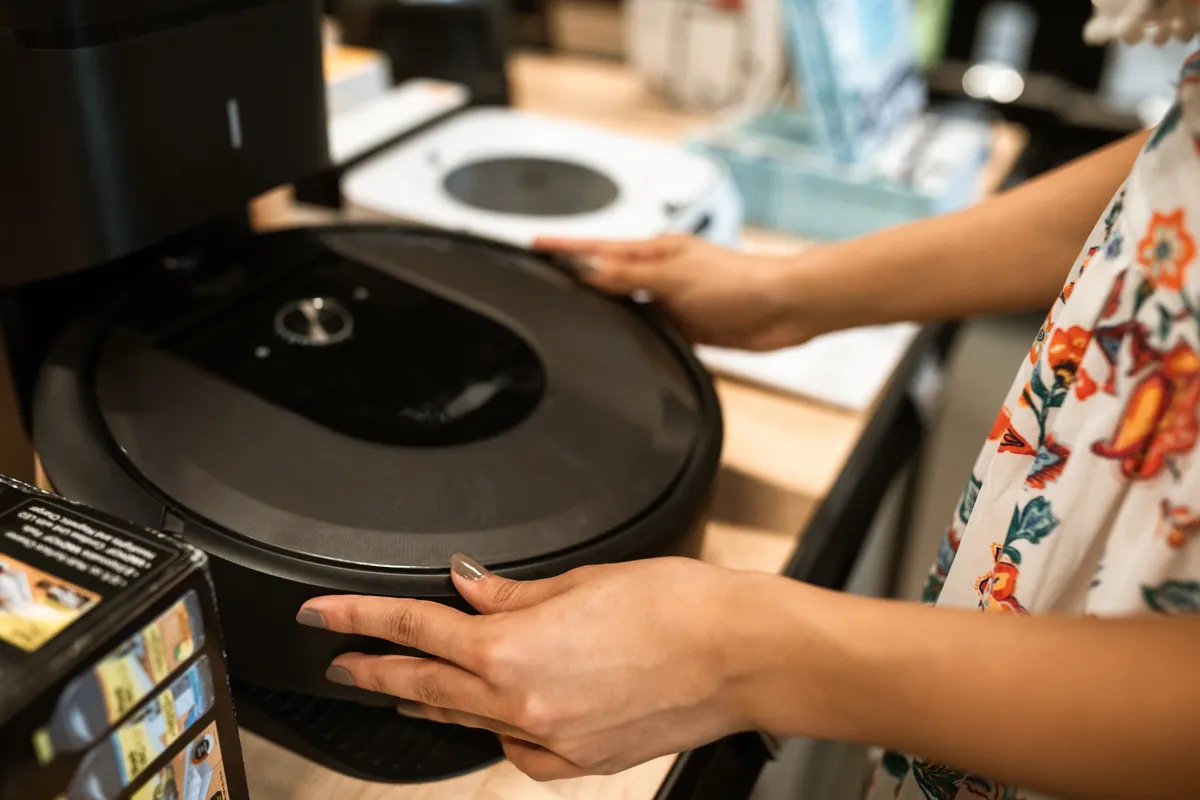
Start with your floors and home size, not the model name. Carpet-heavy homes lean toward uprights, hard floors and stairs suit sticks and canisters, and robots handle daily upkeep. Then compare filtration, bin size, battery and ongoing costs.
Data last updated:
Match the vacuum to your floors first, then to your home size and who lives in it. A carpet-heavy house points toward an upright, a mostly hard-floor apartment toward a stick or robot, and stairs, upholstery and cars toward something you can carry or pull behind you. Features like filtration, bin size and battery come second. This guide walks through that order so you can narrow the field before you compare models.
A note on method: this site compares manufacturer and retailer specifications. It does not run hands-on tests, so the advice below is about reading specs and trade-offs, not about measured performance.
How to choose a vacuum cleaner: start with your floors and home
Floor type is the biggest single factor. Sealed hard floors are easy for almost any vacuum, so convenience and weight matter more. Carpet and rugs are harder, and that is where brush-roll design and suction start to matter. If you have both, look for a machine that handles both surfaces rather than optimizing for one.
Use this table as a starting point, not a rule.
| Your situation | Types to look at first |
|---|---|
| Mostly carpet or large rugs | Upright |
| Mostly hard floors, small or mid-size home | Stick (cordless), robot |
| Stairs, tight spaces, mixed floors | Canister, lightweight stick |
| Daily upkeep with minimal effort | Robot, ideally alongside a stick or canister for deep cleaning |
| Car interiors, upholstery, small spills | Handheld |
| Spills, garage, workshop | Wet/dry (shop) vacuum |
| Periodic deep cleaning of carpet or upholstery | Carpet cleaner (extractor) |
If you are replacing an old machine, think about what you liked and disliked about it. That is often a better guide than a spec sheet.
What each type of vacuum does well, and where it falls short
- Upright: Generally strong on carpet and usually has a large dust bin. The downsides are weight and being harder to maneuver around furniture and in tight spaces.
- Canister: The body rolls behind you while you work with a hose and wand, which makes it easy to move between rooms and handle stairs and hard floors.
- Stick (cordless): Light and quick to grab for small jobs. Trade-offs include battery runtime, a smaller bin and, often, a higher price for good models. If you are weighing brands, our dyson cordless vacuum cleaner page shows how one major maker's range is specified.
- Robot: Hands-free cleaning on a schedule. Robots can miss spots or get stuck under furniture, and they sit among the pricier options.
- Handheld: Useful for cars, stairs and upholstery, but unlikely to work as a main vacuum.
- Wet/dry (shop) vacuum: Built for liquids and debris in garages and workshops rather than everyday living-room cleaning.
A carpet cleaner is a different job from vacuuming. It washes and extracts from carpet and upholstery, so most households treat it as a periodic extra rather than a replacement for a regular vacuum.
If you want to see how models are ranked on this site, the vacuum rankings page is the place to start.
Cordless or corded?
This is the first practical fork for many buyers.
Cordless models give you freedom of movement, are lighter and need no outlet hunting. The costs are limited runtime, frequent charging, a battery that loses capacity over time, and generally less suction than corded machines.
Corded models deliver consistent suction, never need recharging and tend to have larger dust cups. You trade that for unplugging and re-plugging as you move between rooms, and more weight.
When you read a cordless runtime figure, check which power mode and floor type it applies to, since the number on the box may not describe the way you will actually use the vacuum. Detachable, swappable batteries help in larger homes. If you have a big house, a cordless stick alone may not finish a full clean on one charge.
How to choose a robot vacuum
A robot is best seen as a maintenance tool. It keeps floors tidy between deeper cleans, and one buying guide pairs a robot with a cordless stick for exactly that reason. These are the practical questions:
- Where will it live? A robot needs a permanent dock spot with room around it.
- How big is the space? Large open-plan homes call for a bigger bin or a self-emptying station. Self-emptying is more convenient but typically costs more and takes more space.
- What is on the floor? Cables, socks and pet accidents are common trouble spots. Look at how the model detects and avoids obstacles, and whether it maps the home so you can schedule rooms or set no-go zones.
- Do you want mopping? A robot that vacuums and mops combines both jobs, which suits sealed hard floors. It is a poor fit for homes that are mostly carpet or rugs.
- How much do you want to spend? Browse the robot vacuum lineup category to see how features change with price.
Treat marketing suction figures cautiously. Robots with the same headline number can clean quite differently, and the specs rarely show how well one handles pet hair or a tangle of cords.
What to look for in a vacuum cleaner: the specs and features that matter
Filtration. If anyone in the home is sensitive to dust or allergens, look for a HEPA filter and a sealed system, so air does not leak past the filter. Do not treat any vacuum as an allergy treatment, though.
Bagged or bagless. Bagged models tend to contain dust better but add the ongoing cost of bags. Bagless models avoid that cost, but dust can escape when you empty the bin and the bin often holds less.
Suction and power ratings. Brands use different units, such as pascals (Pa), air watts and amps, and they are not interchangeable. Compare like with like, and do not choose on a single headline number.
Brush roll and pets. For pet hair, brush design (for example anti-tangle rollers) and bin size usually matter as much as raw suction.
Weight and handling. Check the weight if you will carry the vacuum up stairs or between floors. Extendable wands and swivel heads help with furniture.
Upkeep. Washable filters can save money over time. Check what replacement filters, bags and batteries cost and whether the maker lists spare parts.
Extras. Attachments, pet tools and self-cleaning brush rolls are available, but choose only what you will really use.
Once you have a short list, our vacuum guides cover specific situations in more depth, and comparing two or three models on verified specifications is easier than reading dozens of product descriptions. Unfamiliar names are defined in vacuum types and terms explained.
A short checklist before you buy
- Write down your floor types and rough square footage.
- Pick a type from the table above, then decide corded or cordless.
- Set a budget range, and decide whether a second machine, such as a robot plus a stick, makes sense.
- Filter by must-haves: HEPA and sealed filtration if relevant, bin size, weight, runtime on the mode you will really use.
- Check the cost of bags, filters and batteries, plus the warranty terms and how to get parts.
- Compare retailer prices before buying, because some retailers raise list prices ahead of big sale events.
What type of vacuum do professional cleaners use?
Many professional cleaners use commercial uprights, and a growing share use backpack vacuums, which you wear while cleaning. An ISSA industry article says backpacks hold a much smaller share of the professional market than uprights, especially in the US, but cites older studies in which backpacks cleaned faster and removed slightly more soil. The article's author works for a carpet extractor maker, and the studies date from 1997 and 1999, so treat the gap as modest. Backpacks can be uncomfortable if they are bulky or you are small-framed, with lighter models around 10 pounds suggested. Home buyers rarely need commercial gear.
What does a HEPA filter actually mean on a vacuum?
HEPA is a standard for a pleated mechanical filter that captures at least 99.97% of airborne particles at 0.3 microns in theory, according to the US EPA. Larger and smaller particles are captured at even higher efficiency. For a vacuum, the filter alone is not enough: air leaking around it can bypass the filtration, which is why a sealed system matters as much as the HEPA label. Check the product listing for both, and note that filtration reduces dust in exhaust air but is not a medical treatment for allergies or asthma.
Should I choose a bagged or bagless vacuum?
Bagged models tend to contain dust better, which can help people sensitive to dust, but bags are an ongoing cost. Bagless models avoid bag costs and let you see when the bin is full, but dust can escape when you empty the bin and the bin often holds less. Robot vacuums offer a similar choice: manual bin emptying, or a self-emptying station that is more convenient but usually more expensive and larger. Pick based on how much you mind emptying a bin and whether anyone in your home is sensitive to dust.