Best Vacuum Suction: What Air Watts, Pa and Water Lift Really Tell You
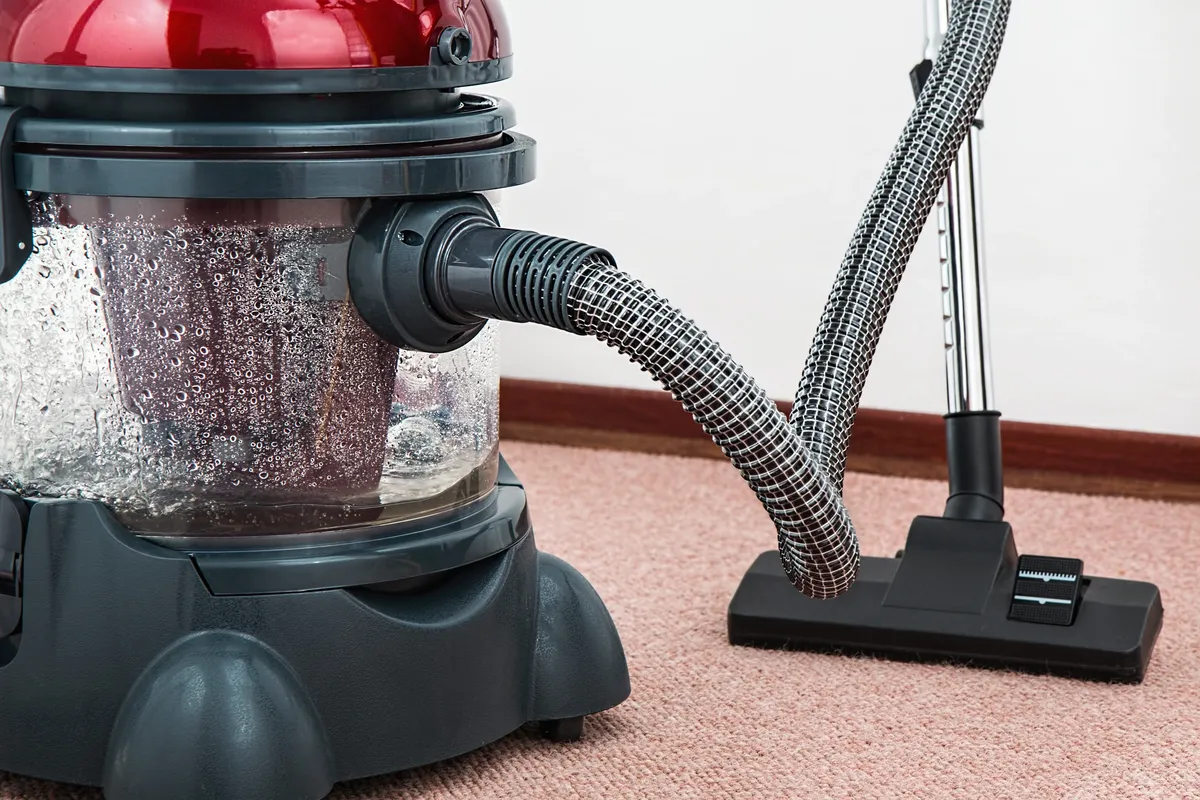
Vacuum suction is quoted in air watts, pascals, kilopascals or inches of water lift, and the numbers are not interchangeable. This guide explains each unit, why a big number does not guarantee better cleaning, and how to compare models fairly.
Data last updated:
If you are hunting for the best vacuum suction, start with one fact: there is no single "suction number" that works across all vacuums. Manufacturers quote air watts, pascals, kilopascals or inches of water lift, and each one measures something different. Knowing which is which keeps you from paying extra for a headline figure that says little about how the machine cleans your floors.
What does vacuum suction power measure?
Two quantities sit behind every suction claim. Suction (pressure) is how hard the motor can pull. Airflow is how much air actually moves through the machine. They trade off against each other, so a spec that reports only one of them is incomplete.
| Unit | What it describes |
|---|---|
| Air watts (AW) | Airflow and suction combined into one figure |
| Pa / kPa | Sealed pressure only |
| Inches of water lift (inH2O) | Sealed pressure only |
| CFM | Airflow only |
You may also run into the phrase "power vacuum." We could not find a standard specification behind it, so look at the actual units above instead. Our page on powerful vacuum cleaners puts these units to use.
Air watts: the closest thing to a standard
An air watt combines airflow and suction pressure into one number. The ASTM F558 test method defines the formula as air watts = 0.117354 x airflow (CFM) x suction (inches of water). Some manufacturers use the fraction 1/8.5 instead, which differs by less than 0.25 percent.
Two cautions apply:
- It is a maximum, not a promise. Airflow is usually stated at a 2-inch opening and water lift at a closed, zero-inch opening, where no air moves and power is therefore zero. The peak lies between the two, so air watts describe potential, not what the machine does with a given tool on a given floor.
- Methods vary. Only compare air-watt figures when the maker says it used the same method, ideally ASTM F558.
Air watts are always lower than the electrical wattage on the label because of unavoidable losses, so two vacuums with the same input wattage can deliver different air watts.
Pa and kPa ratings on cordless and robot vacuums
Pascal figures describe pressure, not airflow, so they capture only half the picture. A Korea Consumer Agency test found that cordless models from Samsung, LG and Dyson all exceeded 280 watts of maximum suction, while Chinese models advertising 18,000 to 48,000 pascals recorded only 58 to 160 watts. The same report notes that international standards for cordless vacuums recognize watts, while robot vacuums lack a clear standard. Korea's revised national guideline states that a cleaning robot's maximum pressure (kPa) "does not represent actual suction power (W)." That test was run in Korea on specific models, so read it as an illustration of why units matter, not a brand ranking.
The practical rule: a Pa or kPa rating can help you compare robot vacuums quoted in the same unit, but do not set it against an air-watt figure.
Why suction alone does not predict cleaning
Sealed suction is a motor's theoretical maximum; at the floor it is lower because airflow through the wand and hose creates friction. One independent cordless-vacuum tester illustrates the point: a model measured at 85 inH2O sealed suction delivered about 42 CFM at the nozzle and scored 94 percent on a deep-cleaning test, while another measured at 65 inH2O delivered about 69 CFM and scored 100 percent. The tester's conclusion is that none of these numbers alone predicts how well a vacuum cleans. These are one reviewer's results, not a universal ranking.
So the motor is only part of the story, and what suits you depends on your home. If shedding pets are the main challenge, read our guide to the good vacuum cleaner for pet hair rather than shopping on suction alone, and if you are dealing with deep stains in carpet, a carpet cleaner machine does a different job than a dry vacuum and is rated differently.
If your vacuum used to pull well and no longer does, our troubleshooting guide on a vacuum that has lost suction covers the usual causes and fixes.
How to judge the best vacuum suction when comparing models
We cannot give one number that counts as "good," because it depends on the type of vacuum and how the maker measured it. A workable approach:
- Match the unit. Compare air watts with air watts, kPa with kPa. Do not convert across them.
- Check the method. Prefer figures stated as ASTM F558, and treat unlabeled numbers with caution.
- Look for airflow too. If a listing gives only a sealed-pressure number, you are seeing half the story.
- Weigh the whole machine. Weight, battery, filtration, bin size and attachments matter alongside suction. Even a compact portable car vacuum is worth choosing on more than one number.
Treat suction figures as one filter among several. If you want to see how a premium cordless range presents its specs, the Dyson cordless vacuum range page is one place to start, and our recommended vacuum cleaners overview and other vacuum tips and tricks help you narrow by type.
Unfamiliar names are defined in vacuum types and terms explained.
How many watts is a vacuum cleaner, and is that the same as suction?
No. The wattage on a vacuum's label is the electrical power it draws, not how strongly it sucks. Air watts, by contrast, measure the useful air power the machine can produce and are always lower than input wattage because of unavoidable losses. Two machines with the same input wattage can therefore deliver different air watts, which is why input wattage is a weak way to compare suction. When a spec sheet lists both, use air watts, ideally from an ASTM F558 test, to compare suction, and treat input watts as an electricity-use figure only.
How do I convert Pa to kPa on a vacuum spec sheet?
One kilopascal equals 1,000 pascals, so a 25,000 Pa rating is the same as 25 kPa. The conversion is simple, but the number still describes pressure only. It says nothing about airflow, so you cannot convert it into air watts or compare it directly with a cordless vacuum rated in air watts. Use Pa and kPa figures only to compare models quoted in the same unit, and look for airflow or real-world cleaning results alongside them.