Roborock Saros 20 vs Roborock Saros 20 Sonic: What Actually Differs
The Roborock Saros 20 and Saros 20 Sonic share a 36,000 Pa suction rating, a 6,400 mAh battery and a 79.8 mm body. They differ in the mop (rotating pads versus the Sonic's vibrating VibraRise 5.0 pad) and in navigation hardware.
Data last updated:
Specifications are compiled from manufacturer and retailer listings, not hands-on testing. A listed feature such as a HEPA filter is a specification, not a health or allergy claim.
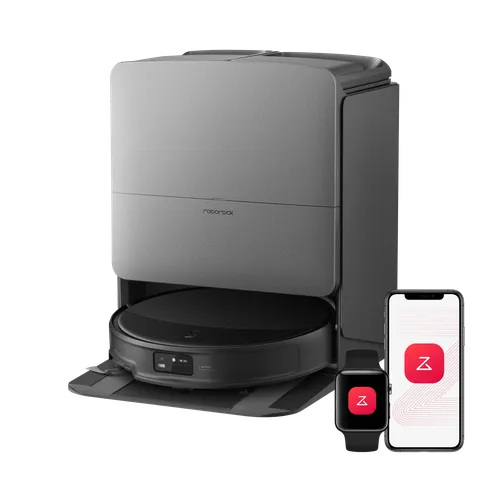
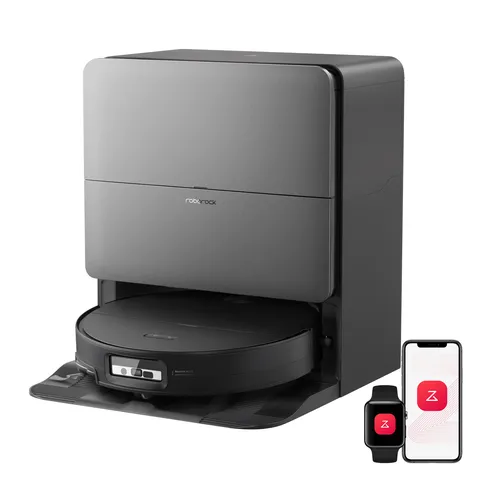
| Spec | Saros 20 | Saros 20 Sonic |
|---|---|---|
| Type? | Robot Vacuum & Mop | Robot Vacuum & Mop |
| Power source? | Cordless (Battery) | Cordless (Battery) |
| Capacity? | 0.259L | — |
| Noise level? | 63dB | 64dB |
| Runtime? | 200 min | — |
| Battery capacity? | 6.4Ah | 6.4Ah |
| Warranty? | 1 year | 1 year |
| Bagless? | No | — |
| Washable filter? | Yes | — |
| App-controlled? | Yes | Yes |
| Self-emptying dock? | Yes | Yes |
| 2-in-1 mop & vacuum? | Yes | Yes |
| Wet & dry capable? | Yes | Yes |
| Surface compatibility? | carpet, hard-floor, tile, multi-surface | carpet, hard-floor, tile, multi-surface |
| Best for? | pet-hair, carpet, hardwood-floors, tile-floors, multi-surface, large-homes | pet-hair, carpet, hardwood-floors, tile-floors, multi-surface, deep-cleaning |
| Color | — | White |
Can't decide? Ask someone
Roborock lists the same 36,000 Pa suction rating, 6,400 mAh battery and 350 x 353 x 79.8 mm body for both robots, so the real decision in this saros 20 vs saros 20 sonic comparison is how each one mops and which sensors it uses to get around.
Roborock Saros 20 vs Roborock Saros 20 Sonic: the mop is the split
The roborock saros 20 robot vacuum uses rotating mop pads, with a FlexiArm that pushes the side brush and mop out into corners and edges. The saros 20 sonic swaps that for VibraRise 5.0, an extendable vibrating mop pad with 14 N of downward pressure. Navigation also differs: the Saros 20 relies on StarSight 2.0 with 3D sensors and an RGB camera, while the Sonic uses a RetractSense LiDAR with Reactive AI 3.0 obstacle avoidance.
If you do not care about the mop type, the two look nearly identical on a spec sheet. If mopping dried-on floor stains matters most, the Sonic's vibrating pad is the feature built for that.
Specs side by side
| Spec | Saros 20 | Saros 20 Sonic |
|---|---|---|
| Suction rating | 36,000 Pa (manufacturer peak) | 36,000 Pa (manufacturer peak) |
| Battery | 6,400 mAh Li-ion | 6,400 mAh |
| Robot size | 350 x 353 x 79.8 mm (13.8 x 13.9 x 3.1 in) | 350 x 353 x 79.8 mm (13.8 x 13.9 x 3.1 in) |
| Mop | Rotating pads, FlexiArm extension | VibraRise 5.0 vibrating pad, 14 N pressure |
| Navigation | StarSight 2.0, 3D sensors, RGB camera | RetractSense LiDAR, Reactive AI 3.0 |
| Double-layer threshold | Up to about 8.8 cm (3.46 in) combined | Up to 8.8 cm combined (single sills up to 4.5 cm) |
| Dock | RockDock, hot-water mop washing up to 100 C (212 F) | RockDock, hot-water washing up to 100 C and 55 C (131 F) warm-air drying |
| Noise (listed) | 63 dB | 64 dB |
| Warranty | 1-year limited | 1-year limited |
The 36,000 Pa figure is a manufacturer peak rating, not a sealed-suction measurement, so it is useful for comparing these two with each other but less so against other brands.
Rotating pads versus a vibrating pad
Saros 20: rotating mop pads that the dock washes with hot water. Roborock also lists dirt detection with re-washing and dynamic carpet pressure adjustment for pile up to 3 cm (about 1.18 in). The FlexiArm design extends the mop toward edges and corners.
Saros 20 Sonic: a single extendable VibraRise 5.0 pad that vibrates at roughly 4,000 vibrations per minute and presses down with 14 N. Roborock's page says the dock washes it with 100 C water and dries it with 55 C air. AdaptiLift 3.0 detects carpet and lifts the mop.
A German review compared the two and reported that the Sonic scrubbed dried-on stains on wood floors somewhat better. That is one outlet's observation, not a lab result, and not our own testing.
Sensors, obstacles and noise
The Saros 20 combines 3D sensors with an RGB camera under StarSight Autonomous System 2.0, plus a SmartPlan 3.0 cleaning strategy. The Sonic pairs a retractable LiDAR turret with tri-laser structured light, an RGB camera and a side laser for Reactive AI 3.0 obstacle avoidance. Roborock says the Sonic's DirTect heavy-dirt detection has to be switched on in the app's AI Laboratory. Sources disagree on how StarSight 2.0 senses the room (some describe it as LiDAR-based), so check Roborock's current spec sheet if navigation is your deciding factor. Both share AdaptiLift Chassis 3.0 for crossing thresholds.
On noise, the listed figures are 63 dB for the Saros 20 and 64 dB for the Sonic. A 1 dB gap is too small to hear, and Roborock's US pages do not publish a noise figure for either, so treat these as listed values and not a reason to choose.
Choosing by floor type
- Choose the Saros 20 if your floors mix carpet, tile and hardwood, or you want the corner-reaching FlexiArm design. Its carpet pressure adjustment and 8.8 cm threshold lift suit varied floors.
- Choose the Saros 20 Sonic if most of your cleaning is hard floors and you want the vibrating mop for dried-on spills, or you prefer LiDAR-based navigation.
- Either works if you want a self-emptying, self-washing robot with the same battery capacity and a body low enough to slide under furniture.
If you are weighing other brands, see our Flow 2 versus Saros 20 comparison, browse more robot vacuums from Roborock, or compare vacuums across the catalog. The wider Roborock product range is on the brand page.
Figures we left out
Roborock's own pages do not publish consistent runtime or weight figures for both models, and the sources we found conflict, so we have left them out rather than guess. Dust bag size and the actual mopping results on your floors are also not covered by a spec sheet. Prices change often; check the current offer on each model's product page before you decide.
The 20 is also set against the 10R in Saros 10R vs Saros 20.
For mop and dock basics, see robot vacuum and mop combos and the guide to robot vacuum spare parts.
Do the Saros 20 and Saros 20 Sonic have the same suction power?
Yes, on paper. Roborock lists both the Saros 20 and the Saros 20 Sonic at 36,000 Pa from its HyperForce motor, which is a manufacturer peak rating rather than a sealed-suction measurement. Both also use a 6,400 mAh battery and share the same 350 x 353 x 79.8 mm body, so suction and size are not what separates them. The difference between these two Roborock robot vacuums lies in the mop (rotating pads versus the Sonic's vibrating VibraRise 5.0 pad) and in the navigation hardware, not in raw suction.
Do both models come with the same warranty?
Both are listed on Roborock's US site with a 1-year limited warranty, with an extended warranty available as an option. The Saros 20 and Saros 20 Sonic therefore do not differ here, so warranty should not decide between them. Terms can change and depend on where you buy, so confirm the details on the retailer or Roborock page before purchase.
Can both robots climb over door thresholds?
Both use Roborock's AdaptiLift Chassis 3.0, which lifts the robot over thresholds. Roborock lists a double-layer threshold height of about 8.8 cm (roughly 3.46 in) combined for each model, and the Sonic page adds that single sills up to 4.5 cm are supported. Real results depend on the shape of your thresholds and the surface on either side, so measure the highest sill in your home against these figures.